Google’s new kubectl‑ai drop is a welcome quality‑of‑life boost for anyone who keeps a terminal tab open at all times. While kubectl-ai handles command translation, the broader AI SRE tool landscape addresses incident detection, investigation, and resolution.
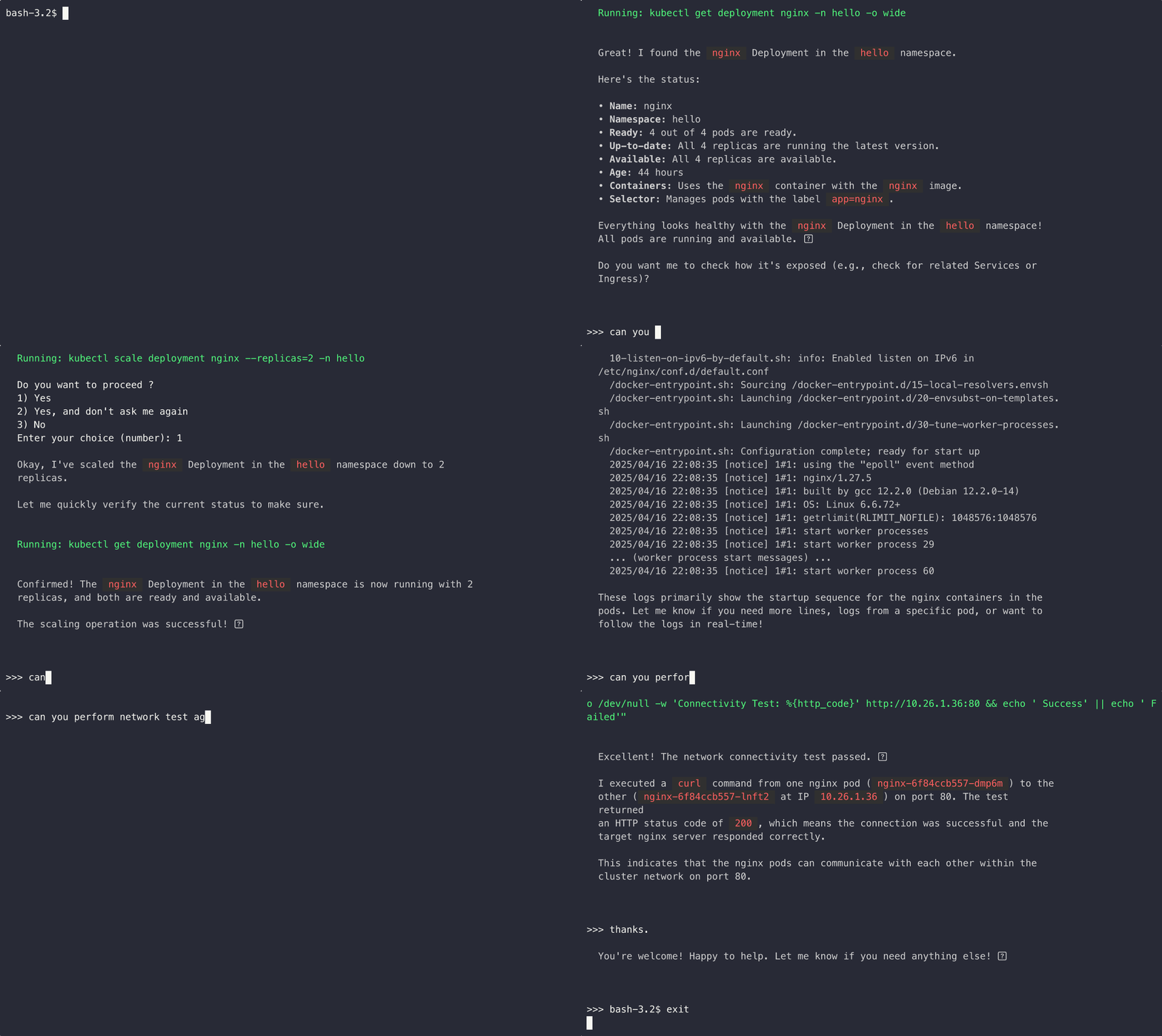
kubectl ai "scale payments-api to 5 replicas if CPU > 80%"
You type an intent in plain English, the tool drafts the command sequence, pauses for confirmation, and only then touches the cluster.
No more flipping between Slack snippets and man pages.
Why it’s worth a look
| Pain point | What kubectl‑ai changes |
|---|
| Late‑night shell gymnastics | One conversational prompt |
| Slow onboarding for junior engineers | The CLI shows the right syntax as it runs |
| Fear of fat‑fingered commands | Built‑in approve / deny gate |
| Model lock‑in | Works with any OpenAI‑compatible endpoint (Gemini, Ollama, Grok, etc.) |
How it works behind the curtain
- Agent‑style planning – Complex requests are broken into multiple steps (inspect → patch → rollout).
- Public test bench – The maintainers run k8s‑bench, a ten‑scenario suite that scores different language models on real break/fix tasks.
- Self‑host friendly – Point the binary at an internal LLM gateway and keep traffic inside your network.
Quick install (macOS)
brew tap google-cloud-cli/kubectl-ai
brew install kubectl-ai
Where kubectl‑ai stops - and where Sherlocks picks up
kubectl‑ai shines at the last mile: translating intent into the right command line.
It doesn’t try to decide when to act; that still rests on alerts and whoever is carrying the pager. The evolution from kubectl-ai to full incident RCA automation represents the next frontier in AI-powered operations.
Sherlocks.ai tackles the upstream part of the story:
- Watches metrics, logs, traces, cloud events-everything - 24×7
- Flags anomalies early and drafts a remediation plan
- Joins your incident channel with the commands already staged (kubectl‑ai style) and ready for approval
If kubectl‑ai gives a taste of natural‑language ops, Sherlocks aims to extend that comfort to the entire incident lifecycle.
Try it yourself
- Clone the kubectl‑ai repo or install via Homebrew. Curious about how different Kubernetes AI tools compare? We've done a detailed field comparison of Sherlocks, k8sgpt, and RunWhen.
- Point it at any model endpoint you trust.
- Start with something harmless:
kubectl ai "cordon node ip-10-0-4-11"
Questions or thoughts? Drop a note. We're always keen to hear how teams are trimming minutes (or hours) off response times.
Stay stable, ship faster. 🚀